FR
FR  EN
EN  ES
ES  JA
JA  KO
KO  PT
PT  ZH
ZH  AR
AR  FA
FA  RU
RU  NL
NL  MS
MS  VI
VI  PH
PH  TH
TH  ID
ID 

Trillions of dollars are traded daily in the forex market. This makes it the largest and most active financial market across the globe. The forex market is open 24 hours a day, 5 days a week. It is used by global traders to speculate on the price movement of currency pairs. The exchange rate between the world’s currencies is set by the forex market. Becoming a successful forex trader requires a good understanding of the market and the traded currencies. In this article, we’ll be looking at 10 of the most traded currency pairs.
Actively traded forex currencies
There are 180 currencies in use worldwide; however, traders focus only on those with strong economic and political stability. Moreover, they prefer currencies that offer consistent liquidity. Traders typically execute Forex trades in the:
- United States dollars (US$)
- Euro (€)
- British pound (GBP)
- Yen japonais (JPY)
The US dollar remains the most prevalent currency in the forex markets, and in fact, it is the most traded currency worldwide. Additionally, the euro ranks as the second most traded currency. Out of the Asian currencies, traders consider the JPY the most active. Moreover, the GBP holds the position of the fourth most traded currency in the forex market.
Other popular currencies traded are the Canadian dollar (CAD), Swiss franc (CHF), Australian dollar (AUD), and New Zealand dollar (NZD).
Currency pairs
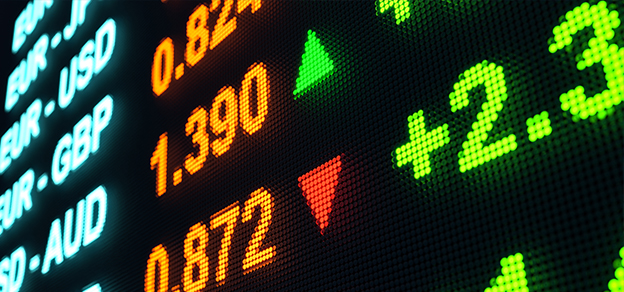
Forex traders buy and sell currencies in pairs. A currency pair compares the value of one currency against another, which forms the exchange rate. For example, in the EUR/USD pair, the first currency on the left (EUR) serves as the base currency, while the currency on the right (USD) functions as the quote currency. A trader uses this pair to determine how much of the quote currency is needed to buy one unit of the base currency. In addition, every currency pair includes a bid price and an asking price. The bid price shows the amount the trader is willing to accept when selling the base currency. Moreover, the asking price represents the lowest amount at which the trader can purchase the base currency.
Top 10 most traded currency pairs
Ten of the most actively traded currency pairs are:
- EUR/USD (Euro/US dollar)
- USD/JPY (US dollar/Japanese yen)
- GBP/USD (British pound/US dollar)
- AUD/USD (Australian dollar/US dollar)
- USD/CAD (US dollar/Canadian dollar)
- EUR/GBP (euro/British pound)
- USD/CHF (US dollar/Swiss franc)
- NZD/USD (New Zealand dollar/US dollar)
- USD/KRW (US dollar/South Korean won)
- USD/HKD (US dollar/Hong Kong dollar)
What are the major pairs?
Traders refer to the four most actively traded currency pairs in the forex market and globally as the major pairs. These pairs include the USD/JPY, EUR/USD, USD/CHF, et GBP/USD. For instance, the EUR/USD pair consistently attracts heavy activity and, in 2021, accounted for about 20% of all forex transactions.
The USD/CAD, AUD/USD et NZD/USD are referred to as commodity pairs. These currencies are usually from countries that produce and export commodities and are sensitive to changes in commodity prices.
What is the appeal in trading the major pairs?
There are several reasons traders trade the major pairs:
- Major pairs typically have more volume and smaller spreads between bid and ask prices, in comparison to exotic pairs.
- As a result, high volume allows traders to open and exit positions easily.
- High volume also means traders may be more eager to buy or sell at a particular time, with a low risk of slippage. Traders must however still be cautious as large slippage can occur in major pairs, albeit less than with exotic pairs.

Exotic currency pairs
Exotic currency pairs typically combine a major currency with one from a developing or emerging market. However, traders engage with these pairs at lower volume, and they often experience limited liquidity. Consequently, exotic currencies show high volatility and react quickly to their country’s economic fluctuations. For example, exotic currencies include the Thai baht, Turkish lira, Iraqi dinar, South African rand, and Mexican peso. Exotic currency pairs usually appear in formats such as:
- EUR/TRY (Euro/Turkish lira)
- USD/ZAR (US Dollar/South Africa Rand)
- EUR/MXN (Euro/Mexican peso)
- GBP/PLN (British Pound/Polish Zloty)
- USD/HUF (US dollar/Hungarian forint)
- EUR/RON (Euro/Romanian Leu)
- TRY/JPY (Turkish lira/Japanese yen)
Forex market price fluctuations
The marché des changes is largely impacted by macroeconomic and geopolitical factors, in that they are what ultimately drive currency value. Factors include:
- Inflation (L'inflation)
- Instabilité politique
- Unemployment rates
- Global trade
- Environmental disasters
- International capital markets
- Stock, bond, and commodity markets
This makes it very important for forex traders to follow world news and its impact on the performance of their trades.
When currency prices decline, traders describe the market as being in a bear state. Consequently, investors in this environment often adopt more risk-averse behaviours, regardless of how long the downturn lasts. Meanwhile, a bull market typically emerges when currency prices rise. Moreover, investor sentiment becomes more optimistic, and traders generally develop a more positive outlook on the forex market.
Contrats de différence (CFD)
Currency pairs can be traded using CFDs. A CFD is a contract between two parties, for example, a forex trader and a CFD forex broker, to exchange the difference between an asset’s opening and closing price. Since CFDs are derivative products, the trader is not required to take ownership of the asset. The CFD forex brokers make their money through spreads (the difference between the ask and the bid price).
CFDs typically provide higher leverage than traditional trading but leverage is very volatile and comes with very high risk. The amount of leverage a forex trader opts for is usually based on their risk tolerance and how much money they’re willing to lose. If not handled properly, leverage can see a trader losing large sums of money.
Starting out as a forex trader
If you’re new to forex, take the time to learn as much as you can about the forex market and how to trade. First, learn everything you can about currency pairs, currency trends, and the factors that impact currency prices. Then, identify the trading style that best fits your needs. Finally, build a trading plan and strategy that will help you achieve your trading goals.
Avertissement :
Ces informations ne doivent pas être considérées comme un conseil ou une recommandation d'investissement, mais uniquement comme une communication marketing.