ES
ES  EN
EN  FR
FR  JA
JA  KO
KO  PT
PT  ZH
ZH  AR
AR  FA
FA  RU
RU  NL
NL  MS
MS  VI
VI  PH
PH  TH
TH  ID
ID 

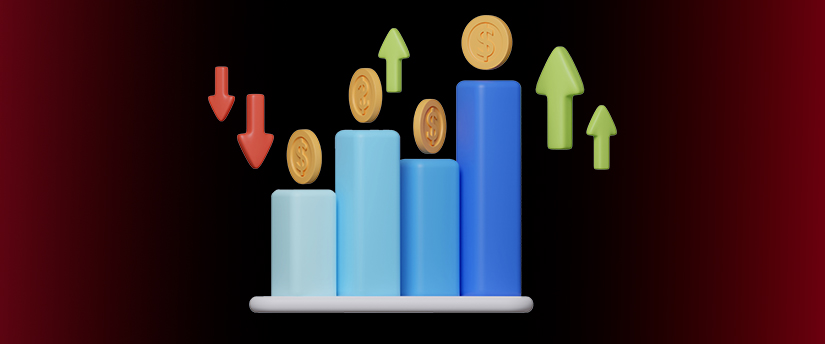
By definition, the term financial market refers to any marketplace where financial products are traded. These include the stock market, bond market, foreign exchange market and derivatives market, among others.
Financial markets play a key role in capitalist economies because they distribute resources and generate liquidity for companies and entrepreneurs. They also provide a platform where buyers and sellers can connect and trade their preferred financial assets at market-determined prices.
Financial markets develop securities products that create a return for investors or lenders with extra funds and make these resources available to borrowers who require more funds.

More about the financial markets
Financial markets develop through the buying and selling of financial products such as stocks, bonds, currencies, and derivatives. They rely heavily on transparent information to maintain efficient and fair pricing. However, due to macroeconomic factors like taxes, a security’s market value may not always reflect its true worth.
Some financial markets are small, without much activity going on. Others, however, such as the New York Stock Exchange (NYSE), exchange trillions of dollars in securities daily.
The type and maturity of claims, timing of delivery and organisational structure may all be used to categorise these markets.
Types of financial markets
Below are some of the most popular types of markets:
Stock market
The stock market is one example of a financial market in which investors may purchase and sell shares of publicly listed companies. The primary stock market hosts new stock issues, called initial public offerings (IPOs). The secondary market allows investors to buy and sell securities they already own.
mercado de divisas
The FX market allows traders to buy, sell, and speculate on currency exchange rates. Because money is the most liquid asset, the foreign exchange market is the most liquid market in the world. Its daily trading volume reaches $7.5 trillion, which exceeds the combined value of the futures and stock markets.
The forex market, like other over-the-counter (OTC) markets, is decentralized and runs through a global network of computers and brokers. The currency market includes banks, commercial companies, central banks, investment management firms, hedge funds, retail forex brokers, and individual investors.
Over-the-counter (OTC) market
As mentioned earlier, an over-the-counter (OTC) market is a decentralized market with no physical location, and all trading occurs electronically. Participants trade securities directly with each other without using a forex brokerage. OTC markets may handle certain securities, such as those from smaller or riskier businesses that do not meet exchange listing standards. However, exchanges still conduct most stock trading.
Some derivatives markets, on the other hand, are entirely OTC and hence constitute a significant component of the financial markets. In general, OTC markets and the transactions that take place in them are significantly less regulated, less active, and more obscure.

Commodity Markets
Commodity markets are where buyers and sellers meet to trade physical commodities like corn and soybeans, which are agricultural products, oil or gas, which are energy products, gold, silver or platinum, which are precious metals or “soft” commodities. They are all called spot commodity markets, and they are where actual things are traded for money.
Commodity traders conduct most of their activity on derivatives markets, which use spot commodities as the underlying assets. They trade commodity forwards, futures, and options on both OTC markets and listed exchanges worldwide, including the Chicago Mercantile Exchange (CME) and the Intercontinental Exchange (ICE).
Bond Markets
An investor buys a bond to lend money for a set period at a fixed interest rate. You can think of a bond as an agreement between a lender and a borrower that outlines the loan and its payments. Companies, municipalities, states, and sovereign governments issue bonds to finance their projects and operations.
The bond market offers securities such as notes and bills that organizations like the United States Treasury issue, and many people also refer to it as the debt market, credit market, or fixed-income market.
Derivatives Markets
A derivative is a contract between two or more parties, and its value comes from an underlying financial asset such as a security or an index. These instruments function as secondary securities because their price depends entirely on the value of the underlying asset. A derivative has no standalone use. Instead of trading stocks directly, the derivatives market focuses on futures, options, and other complex financial products. These products draw their value from underlying assets such as bonds, commodities, currencies, interest rates, market indexes, and stocks.
Futures markets list and trade futures contracts. Unlike OTC forwards, these markets operate under strict regulation, follow defined contract specifications, and rely on clearinghouses to validate and settle trades.
Options markets, such as the Chicago Board Options Exchange (CBOE), list and monitor options contracts in a similar way. Futuros and options markets can list contracts on many asset classes, including stocks, fixed-income securities, commodities, and more.
Cryptocurrency Markets
Cryptocurrencies such as Bitcoin y Ethereumare decentralized digital assets built on blockchain technology, and they have gained significant popularity in recent years. Traders can now access and trade thousands of cryptocurrencies on a global network of independent online exchanges. These platforms also provide digital wallets that let users exchange one cryptocurrency for another or convert them into fiat currencies like dollars or euros.
Users face risks from hackers or fraud because most cryptocurrency exchanges operate as centralized systems. Decentralized exchanges are also available, and they function without a central authority. These platforms allow direct peer-to-peer (P2P) trading of digital currencies without relying on an official exchange operator. Major cryptocurrencies also support futures and options trading.

What do financial markets do? Benefits
Financial markets exist for many reasons, but their most basic purpose is to distribute money and assets efficiently within a financial economy. They support the smooth operation of the global economy by allowing capital, monetary obligations, and money to move freely. At the same time, they give investors opportunities to earn long-term financial returns. Without financial markets, capital would not flow efficiently, and economic activities such as trade, investment, and business growth would decline sharply.
Descargo de responsabilidad:
Esta información no se considera un consejo de inversión ni una recomendación de inversión, sino una comunicación de marketing